

No Way: iLAKS reports that fish consumption in Norway continues to fall. From 2024 to 2025, consumption fell by two percent to 17.94 kg per person. Over the last ten years, each person has eaten 13.5% less fish or the equivalent of 2.8 kg per person. In terms of meals, this means each Norwegian is eating fifteen less fish and seafood meals than they did ten years ago.
The Norwegian Seafood Council say that there are several reasons why consumption is declining but they highlight the reduced availability of cod due to lower available quotas, the increased price of fish and new food trends that are not usually fish based. Yet, at the same time, seventy-five percent of Norwegians say that they want to eat more fish, encouraged by healthy eating trends and, according to the Seafood Council, by the promotional efforts of footballer Erling Haaland.
Speaking at the Arendalsuka meeting, the Fisheries Minister presented the Norwegian Government’s ambitions and plans to get more people to eat more fish and seafood. She said that the message is clear; seafood is healthy, sustainable and important for Norway’s emergency preparedness so now it’s about getting more people to choose seafood and more often. The Minister’s message might be clear to her but in my opinion, such a message is a guaranteed way to discourage people from eating fish and seafood after all, who wants to eat something because it is important for emergency preparedness!
Yet it seems that the decline in consumption can be reversed, for example, sales boom when the price of fish and seafood is discounted in stores. Sales of salmon saw a big increase in 2025 as a result of promotional activity and good price related offers. However, what is not known is whether the short-reduced price encouraged people who had stopped eating fish because of the price to buy it again or people who were already buying fish to take advantage of the low price and stock up their freezers.
The Seafood Council say that the reasons for the changes in consumption are complex and they are, but it is possible to unpick the complexity.
As the data shows, the decline in consumption is not a recent occurrence so the current reduced availability of cod is not a primary cause, and neither are new food trends. Price has always been a main driver of consumption, but all food prices are rising. It really depends on the individual circumstances of whether people can afford to maintain their usual diet or make changes accordingly.
Such changes are not unique to Norway as a recent report from the European Market Observatory for Fisheries and Aquaculture Products (EUMOFA) has revealed. Consumption fell from 12.9 million tonnes in 2014 to 10.2 million tonnes in 2023. This equates to 22.9 kg per person down from 25.5 kg in 2014. Clearly, there are people in Europe eating a lot more fish and seafood than there are in Norway.
EUMOFA found that the biggest change was not a decline in consumption per se but rather a reduction in the number of times that people ate fish and seafood especially at home. By comparison, people are more likely to eat fish out and I agree. In fact, this reflects my own fish consumption where I almost always now choose the fish option when eating out but rarely bother at home. I have tried to analyse why this is and the simple answer is that I can no longer be bothered with the faff, although I will be no doubt told fish doesn’t have to be a faff.
The biggest driver of consumption, according to EUMOFA, is price but price is not the be all and end all of fish and seafood consumption because if it were, people would be trading down and buying the cheaper species such as herring and basa and other low-cost species that never make it to the retail market. If they are trading down, it is to other foods rather than fish.
EUMOFA also says that convenience needs to be highlighted as a key driver of consumption with demand growing for portioned, pre-packed, ready to cook and ready to eat. However, this is nothing new. I have been arguing that convenience should have been the focus of fish marketing for the last thirty years. Unfortunately change happens slowly and the idea of convenience can be highly nuanced. For example, there can be a massive divide between the convenience of portioned fish, the convenience of a ready meal and the convenience of a can of ready to eat tuna.
I would argue that a pack of two fillets of fish can be just as frightening to some as a whole fish. It is not helped when the cooking instructions are often too conservative, which leads to over-cooked fish and an unpleasant meal. It’s not surprising when consumers are put off fish. My view is that to understand what convenience really means is to see what other convenience foods consumers eat and try to adapt fish to a similar offering. The other problem is ensuring convenience products are where consumers can actually see them.
EUMOFA says that the European market for fish and seafood is becoming more polarised with lower-income consumers likely to trade down and even ditch the category altogether. At the same time higher-income consumers continue to purchase premium fish and seafood particularly for special occasions, however it is unclear what premium fish and seafood means other than expensive.
EUMOFA also says that where consumers buy their fish and seafood is changing with more emphasis on the supermarket and less on traditional fishmongers. However, we in the UK have been well-aware of this trend as the number of fishmongers appears to be declining faster than the consumption of the fish they sell. One of the latest casualties is relatively local to me and should have had all the hallmarks of a good business. It was in a relatively affluent London village which has a High Street with a premium butcher and greengrocer as well as an organic shop, not forgetting several fashionable cafes. Yet the business just went bankrupt, which actually was not that surprising as the shop always appeared to be devoid of customers. The village is popular with those working in the London financial district because the commute is direct and easy. It might be thought that with plenty of money in the area, a traditional fishmonger would do well, but clearly local residents prefer to spend their money on other things besides fish. The question is what does it take to get these East London residents to eat more fish, especially as there is now just one traditional fishmonger in the whole of northeast London?
I came across a similar question on social media recently that asked can Erling Haaland get young people to eat more fish? Sadly, the answer is no, at least not without other changes. The reason is simple; I believe that Erling Haaland does little to increase sales. Instead, he raises awareness of fish and seafood, but awareness does not translate into sales and consumption. As mentioned earlier, many Norwegians, including young people, when asked, say that they want to eat more fish and seafood, but they don’t translate this want into action. The comment I saw on social media says the same thing. Even Erling Haaland may not be able to overcome the barriers that prevent consumers buying fish and seafood such as price, inconvenience, lack of cooking experience and more attractive other food choices. Erling Haaland might increase awareness which to the Norwegian Seafood Council would be a winner as it would demonstrate that they are doing a good job, but unless the right marketing is in place with the right product being in the right place at the right time, then whatever Erling Haaland does might be somewhat a pointless exercise.
However, the Norwegian Seafood Council are offering Asda customers the chance to win a signed Erling Haaland shirt with no purchase necessary. In fact anyone can enter through the Seafood Council website You just have to answer the question which national team does Erling Haaland represent https://www.seafoodfromnorwayuk.com/.

Finally, I saw a post on social media about the success of Brixham Fish Festival this summer. The event included a mass cook by some celebrity chefs who spent the day barbecuing locally caught sardines. The post said that three and a half thousand people enjoyed eating the sardines, many of whom had never eaten a fresh sardine before. The post suggested that with such interest the public could be converted to eating these fish more regularly. However, I think the point was that it was a nice sunny day and the fish were cooked for them by expert chefs at a fish festival. This does not mean that these members of the public would be so willing to emulate this experience at home.
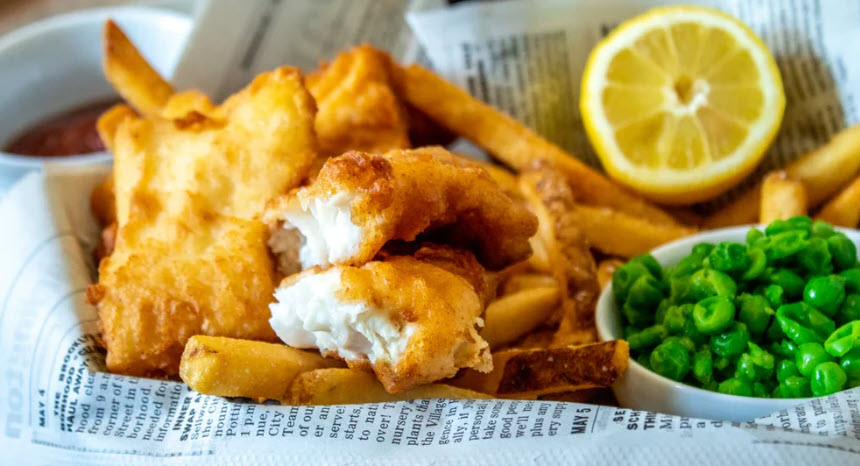
45 squid: The Times newspaper says that their analysis shows fish and chip prices have risen by 64% since 2021. This means that a traditional takeaway for a family of four will cost about £45. The average price of a single portion has risen from £6.95 in 2021 to £11.43 last month. The newspaper says that the price rise has been drive by sanctions against Russian fish companies which were key suppliers to the UK market and reduced quotas for cod and haddock elsewhere. Apparently 5,475 fewer tonnes of frozen cod and haddock were imported in the first five months of this year, but they cost £37 million more. The Times also said that stocks of pollock, once held up as a sustainable alternative to cod, have also been erratic. However, the newspaper appears to have confused the species as have some of the people to whom they spoke.
The Times says that conservationists have long warned that cod supplies face a crash after decades of overfishing. The alternative was supposed to be pollock, a much cheaper species. The newspaper says that documentaries such as Hugh’s Fish Fight in 2011 promoted pollock as an eco-friendly alternative although I can only remember Hugh pushing fish and chip shops to offer a mackerel sandwich instead of cod and chips. They also mention Jamie Olivers attempt to market his own brand of pollock fish fingers.
The Times spoke to one chippy owner who said that Norwegian suppliers had promoted pollock but this year he had struggled to obtain supplies. Andrew Crook, President of National Federation of Fish Friers said that he could obtain pollock, but he struggled to sell it to customers because of its darker earthier tasting flesh. The Times said that only 182 tonnes of pollock were imported between January and May this year, which represents 94% less than imports of cod and haddock.
What we do know is that the pollock in Jamie’s fish fingers was Alaskan pollock and the UK imports about 28,000 tonnes of this fish a year, most of which goes into coated retail products. In Europe we have two related species pollack and coley (saithe). Pollack has lighter coloured flesh whilst coley’s flesh is much darker. The Norwegians have been trying to promote coley, but stocks are not as certain as they used to be. I believe that the pollack fishery is quite small.
The Times also talks to fish & chip shops about other species such as dogfish (often sold as rock salmon) and octopus but it is difficult to see how these can be seen as real alternatives to cod and haddock.
The problem is that the fish and chip sector is too blinkered to see a viable solution to high cod prices. They are looking for a single alternative to costly cod, and it simply doesn’t exist. They are also always looking overseas when the answer could be found at home. I have written previously about ex Radio 2 DJ Chris Evans who always used to say that fish and chips is all about the batter and the species of fish used was irrelevant.
At the same time, the message from chippy owners is that they have difficulty in sourcing some alternative species on a regular basis. The simple answer is the mixed fish box. There are lots of under-utilised species caught from UK waters which could be filleted into a box of mixed species fish and then supplied frozen into the fish and chip shop sector and marketed as lower cost potluck fish and chips. The chippy could list the species used in store and explain why this mixed fish approach should help keep costs down. It would also be a more sustainable approach to fishing since most fish would find a ready home.
Many fish and chip shops serve large-size portions, which explains why the cost can be so high. Portion size control has got out of hand. Better sized portions at a more reasonable cost might be more attractive proposition for many consumers.
Finally, I have found one chip shop that does offer a more reasonable option. This is the franchise chain of Mother Hubbard’s. In my part of London, they serve cod and chips for £14.99, which is well above the average, but it does include a side order worth £2.45. However, they also offer a XXL pack which serves a family of four. It too comes with a side order worth £2.45 and costs just £28.95, which is less than two standard portions of fish and chips. It’s a real bargain. It is based on a very large piece of fish which needs to be divided up but there is more than plenty to go round a family.