
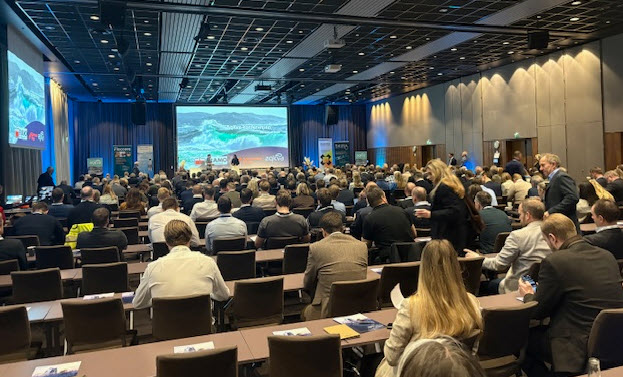
Are you listening: During May, the Norwegian Government held the first of two input meetings in which those interested in the new Aquaculture Report could present their views in person before the Minister.
According to Intrafish, amongst those speaking was Simon Økland from Bremnes Seashore who was clear that more knowledge was needed about sea lice and their impacts on wild salmon. He said that more is needed than models and assumptions.
In response to this and other similar comments, the Minister said that the Government regulates according to the knowledge that is known today, but that she has made it clear to both the Institute of Marine Research and the Veterinary Institute that they should improve the knowledge as a priority as part of newly commissioned projects.
The message from these presentations, as well as the Aquaculture Committee, is manifestly clear. There needs to be a proper debate about the impacts of sea lice on wild salmon. It is not that new knowledge is needed, it is just that there is already wider knowledge than that promoted by the Expert Group etc and even if it means going back to answer some basic questions, all this knowledge should be put on the table and discussed. It is not enough to rely on the knowledge from IMR and VI, who after all have a vested interest in the research.
It has never made sense that the Expert Group should consist only of scientists when their decisions affect one of Norway’s key industries. There are people working in the sector who also have a wealth of knowledge that is simply not included in the discussion.
There is such a simple solution to this issue. There needs to be a conference to discuss the science and unlike the current international Sea Lice conference where researchers present their work on any subject, the conference should address the issues – Do sea lice associated with salmon farms impact wild fish populations? Where are the sea lice larvae that are the focus of the models? And so on. It is not that difficult. I would argue that if the Government, FHF or the scientific community do not want to organise such a conference, then the industry should. If there is no wider discussion, then the industry has only itself to blame when new unworkable regulation is imposed on it.
The RCT Debate: I am jumping ahead slightly in my discussion of the Chief Scientific Adviser (CSA) Marine’s report about the SEPA Sea Lice Framework to consider one of the most important debates about the impact of sea lice – The Randomised Control Trials (RCT). In the CSA report this covers five pages from paragraphs 48 to 65.
This begins as the RCT debate but after one page evolves into the more controversial Jackson Krkosek debate, which in my view should be the starting point but the CSA Marine chooses to begin with an analysis of three different papers, which he clearly believes to be more important.
My understanding is that the CSA has no background in the sea lice issue and in my opinion, I would suggest that he has been guided by others in choosing to begin with these three papers. The first thing to know is that these three papers are all interconnected. The author of paper one is a coauthor of paper two. The author of paper two is a co-author of paper three and the author of paper three is a co-author of paper one.
The first paper is from 2013 and by Martin Krkosek from Canada. Although a peer-reviewed paper and therefore considered gold standard by those opposed to salmon farming, I am not sure I consider Martin Krkosek to be an independent scientist. I know I will be accused by some as being of the same ilk, but I would be more than happy to face those accusers and discuss the issues. By comparison, Martin Krkosek has never responded to any contact. The only conclusion is that he doesn’t want to discuss his work with anyone who has questions concerning the validity of his analysis.
Martin Krkosek was the first graduate student to be based at the Salmon Coast Field Station, which was established by Alexandra Morton, who is well-known in Canada and elsewhere, for her anti-salmon farm views. Martin Krkosek has maintained his relationship with the Field Station and is now one of the directors. He first came to public attention when evidence for one of his early scientific works claiming sea lice associated with salmon farms damaged wild salmon stocks was found to have come from a farm that was fallow for much of the study period and thus was empty of fish. Due to his associations, there will always be suspicion that Dr Krkosek’s work is part of a wider agenda.
In his paper, Martin Krkosek considers 24 different experimental trials, conducted by others, involving 283,347 smolts released in two groups of treated and control fish. According to the CSA report, the results demonstrated a significant positive effect of the treatment on returning fish with an overall odds ratio of 1.29 which corresponds to an estimated reduction in adult recruitment of 39% as a result of treated versus untreated fish.
There are two interesting aspects to this work which are not considered. Firstly, the paper ignores the natural background mortality which in 2013 was around 95%. It is unclear how Krkosek can determine 39% reduction in recruitment on the back of such a high background mortality. Secondly, the paper was submitted for review on the 4th of October 2012. It was accepted for publication on the 15th of October 2012, just 11 days later. How can this work have been properly peer-reviewed in such a short time, when most papers take months to go through the vetting process?
It is interesting to note that the CSA includes an explanation of the term odds ratio which he says is a way of comparing the changes of something happening in one group compared to the chances of it happening in another group.
Although the Krkosek paper lists the results from the 24 different studies, it does not include much discussion of the numbers Instead, there is a focus on various statistical analyses through which he arrives at the results mentioned above.
I have taken a different approach and simply expressed the data as a percentage of fish returned as compared to the number released of both groups of fish. For the control fish 4.03% returned (total mortality 95.97%) whilst for the treated group, the percentage returned was 4.53% (total mortality 95.47%) equating to a difference of 0.5%. Thus, out of every 200 fish released, just one more returned if it had been exposed to an anti-sea lice treatment. Whichever way the maths is applied, it is difficult to understand how this can equate to a 39% reduction in recruitment due to sea lice. I also used the numbers provided by Krkosek to calculate the odds ratio and did the same to the other two papers cited. I will compare the results of all three at the end of this discussion.
The second paper is by Knut Vollset of NORCE in Norway. Dr Vollset is now a member of the Sea Lice Expert Group and the Scientific Committee for the Management of Wild Salmon. Martin Krkosek is a co-author of this paper.
Dr Vollset also conducted a similar analysis of various different RCT studies involving 665,678 released smolts. Inevitably, some of the studies will be the same as used by Krkosek three years earlier. The CSA only mentions that the range of mortality due to sea lice from the 12 studies ranged from 0.6% to 31.9% and that the higher levels of mortality were associated areas where salmon farming occurred. The CSA did not discuss the overall findings which showed that the percentage of the control fish that returned was just 0.56% whilst the treated group had a percentage return of 0.64%. This equates to a difference of just 0.08%. The paper refers to the difference in terms of a Risk Ratio rather than the Odds Ration used by Krkosek, however it is clear that with a difference of just 0.08% between the two groups, the impact of sea lice must be considered negligible.
The third paper is from Paddy Gargan and is the last one he authored before he retired. Paddy worked for the Irish Government department Inland Fisheries Ireland (IFI) which managed Irish rivers for the benefit of anglers. IFI’s involvement in sea lice research is not surprising given the negative attitude of salmon anglers to salmon farming. Many years ago, IFI were involved in a controversy over sea lice monitoring as the agency were employed to collect sea lice data on behalf of the Irish Marine Institute. There was some concern about the differences in some results submitted and this resulted in an independent investigation conducted by Dr Ian Cowx of Hull University. It seems that not all lice free fish sampled were recorded.
This latest paper extended the data set used by Dave Jackson for his 2013 paper and included new data up to 2018 with a total of 541,893 fish from 28 trials over nineteen years. The CSA report highlights a Risk Ratio of 1.22 which equates to 18% fewer returns of untreated fish. However, the numbers show that 1.99% of the control fish and 2.31% of the treated fish returned, equating to a difference of just 0.32%
Whilst the CSA reports, titles this section as the RCT debate, the three papers cited all offer a single point of view about the impact of sea lice. This is not surprising due to the strong connection between the authors. This is not really a debate
Finally, I want to highlight the results of my calculation of the Odds Ratio for the three papers cited. I have focussed on the Odds Ratio as this was specifically highlighted by the CSA Marine even though the only paper to mention Odds Ratio was Krkosek (2013). The Odds Ratio was 1.29 but I have looked at the data and am unable to ascertain how this was actually derived.
I have researched Odds Ratio, and several different sources offer a very simple formula for its calculation, and this is the formula I have opted to use. It does not include any complex statistics but is simply a measure of fish released compared to fish returned. The Odds Ratios for the three papers all appear very similar and in the case of Krkosek, much lower than previously reported.
|
Paper |
Odds Ratio |
| Krkosek et al 2013 | 1.12 |
| Vollset et al 2016 | 1.14 |
| Gargan et al 2025 |
1.16 |
I would suggest that the claims that wild fish are negatively impacted by sea lice have been highly overstated. This is the crux of the matter and one that the CSA has failed to address and appears to dismiss Jackson’s findings and instead accept Krkosek’s (2014) interpretation. Interestingly, the CSA says that the quantification of sea lice impacts has generated significant academic debate centred on the statistical methodology from which he says that there is no ‘right’ or ‘wrong’ but clearly there is, as SEPA has launched a Risk Framework based on science that is very different to my interpretation of the scientific knowledge. SEPA and I cannot be both right and/or wrong. Unfortunately, SEPA refuse to discuss anything to do with the science from which I draw the conclusion that they are not as confident as I am in discussing the science that underpins the Framework. This has clear implications for the future of wild salmon as it seems SEPA are trying to protect wild fish from a threat that doesn’t actually exist. Certainly, we know that after nine years, the Norwegian Traffic Light System has failed miserably to protect wild salmon. This is because those who appear to be in the Krkosek camp continue to refuse to discuss the issue.