
Taking at face value: NASCO estimated that there are over two thousand papers written about sea lice and salmon farming but there have been almost none written about the life of the sea lice when there are no salmon farms present. What is least known is where and how sea lice infest wild fish. Certainly, there are not billions of larvae dispersing through the sea lochs as scientists claim occurs wherever there are salmon farms. Most parasites are quite targeted when it comes to host location so it is unlikely that finding a host is left to random encounters. The best current guess is that sea lice host location occurs near river mouths so targeting smolts as they emerge from freshwater into the sea. After all, every smolt must travel through this zone. Thus, any search for infective sea lice larvae in the wild is most likely to be met with success near river mouths.
One theory is that young stages drop off returning adult salmon as they approach the interface between sea and freshwater. These stages then overwinter attached to material on the seabed and when cues from spring weather are received, the infective larval stages head up to the surface layers where encountering a passing fish is most likely.
In a report to ICES, Jackson and others (1994) found that unlike nauplii, copepodids were only detected in pumped samples taken from near the seabed and were recorded only near farms or a river mouth with a known salmon run. Jackson suggests that copepodids might have an epibethnic phase for this development stage. Jackson also found that copepodids of reared sea lice were only found at the bottom of culture vessels. A similar observation was made by Johnanessen in 1978 when he noted that nauplii II larvae dropped to the bottom of rearing vessels just prior to moulting and that the copepodids were found attached to the cloth mesh surfaces rather than in the water column. Jackson confirms the idea that infective larvae released by lice on wild fish ascending the estuary would remain in position below the salt wedge. This would facilitate higher transmission rates on seaward migrating smolts.
This view would suggest that high concentrations of sea lice will be found around river mouths as compared to elsewhere. This is the fundamental point that I wish to make in this commentary. However, it will only become apparent why as the commentary unfolds.
I have previously written about the recently published report on SEPA’s Sea Lice Regulatory Framework from the Chief Scientific Advisor to the Marine Directorate. At the time, I mentioned that I would delve deeper into the science issued in support of the claim that the framework is scientifically defensible. I would argue that it is not and I will begin my explanation as to why by looking at the first scientific reference made in the report.
Annex 2 is the evidence base for sea lice impacts and the first part is titled environmental sea lice observations. In paragraph 32, the report highlights the paper by Harte et. al. (2017) which describes the presence of sea lice in plankton samples collected from east and west coast sampling sites over a period of a decade. Densities of 14.2 lice m3 were found in the west compared to less than one louse per cubic metre in the east.
The CSA then provided a comment in paragraph 33 saying that ‘although this is not an exhaustive exploration of environmental sea lice levels these long-term series of east and west coast demonstrate a substantial difference in abundance and species composition between the two indicator sites. ‘
Whilst it appears the CSA has taken the results from this paper at face value, anyone digging deeper into the paper will discover that the results are significantly flawed. This is because the comparison of the lice levels along both coasts does not in any way compare like with like. Therefore, the conclusion drawn that there is substantial difference in the abundance of sea lice is totally invalid.
The paper highlights that the east coast sampling site is located 3km off the coast near Stonehaven. The actual location can be seen on the following map.
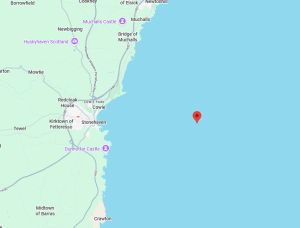
This location is not actually random as it about 15 miles south of the Scottish Government’s Marine Laboratory in Aberdeen. It is also part of the Scottish Coastal Observatory (SCOb’s), which has several sampling stations spread around Scotland. The Stonehaven site is one of two sites that record zooplankton.
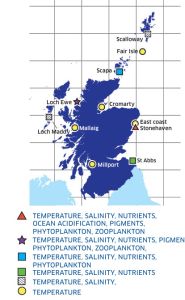
The other site is located on the west coast in Loch Ewe, very close to the site of the now closed salmon farm.
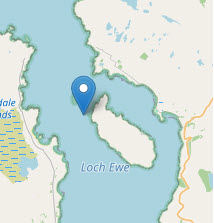
The two sites are very different as one is in the open sea and the other in a sea loch close to shore. The Scottish Government have published zooplankton data from both sites from 1997 to 2020. The classification is for Caligidae which includes both Lepeophtheirus and Caligus sea lice. When I first looked at this data some years ago, I did write to the administrator to enquire whether it was possible to identify which member of Caligidae were being recorded and was told that identifying specific lice was difficult and not part of the SCOb’s programme.
A comparison of the average concertation of lice from this data for both coasts gives a figure of 2.485 for Stonehaven and 0.987 for Loch Ewe. These are just comparable numbers, but they do suggest that the number of Caligiidae is higher off the east coast then on the west coast. This is despite the sampling station in Loch Ewe being in close proximity to a salmon farm.
However, whilst Herte used the data from the Stonehaven SCObs site, she did not use that from Loch Ewe. Instead, the data comes from the Marine Directorate Field Station at Loch Shieldaig. This was established in the mid-1990s to conduct a long-term monitoring programme on the River Shieldaig due to concerns about the impact of aquaculture.
However, with hindsight, this location may not have been the best choice for such a field station. This is because the location is in the middle of a complex system of three sea water lochs.
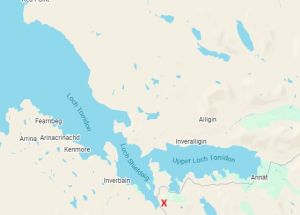
The nature of the prevailing wind and currents in the vicinity of the field station makes the location unusual with local flows away from the open sea. This is apparent from a diagram taken from a paper by Pert and others in 2014.
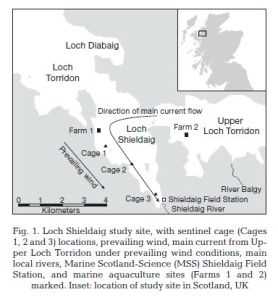
The Pert paper concerning sentinel cages is also highlighted by the CSA report and will be discussed later. However, Pert found that the infestation pressure was highest near the Shieldaig estuary, which Pert says is consistent with the results from an earlier study by McKibben & Hay (2004) who found high numbers of planktonic lice (up to 143/m3) in the river Shieldaig estuary. These are numbers that are huge, especially when compared with lice concentrations found in the Scottish Government’s 2021 SPILLS project. Pert also reports that the high concentrations of lice are predicted by their sea lice dispersal model due to wind forcing.
Whilst the wind and currents may have brought some lice from the nearby farm, the more likely explanation for high lice counts in the river estuary is that it is where sea lice would be expected to accumulate in order to catch a passing host. Unfortunately, it seems that the researchers were employed to look at the impacts of aquaculture, so have not considered that high lice levels may be the results of natural infestation.
I would therefore argue that the Harte paper does not demonstrate a substantial difference in abundance between the east and west coasts. Any comparison made was simply not a comparison of like with like.
Paragraph 34 of the CSA report refers to the Pert (2014) paper which claims to have identified that infestation pressure on sentinel fish correlated with gravid lice concentration from nearby farms. The report also says that the paper demonstrated that sentinel cage proximity to a salmon farm did not determine the prevalence of sea lice on sentinel salmon.
Taking the second point first, it is worth looking again at the relationship between the farms and the sentinel cages. As a reminder, sentinel cages are small pens in which a number of lice free hatchery raised fish are placed and then left for a period of time after which any lice then present are counted.
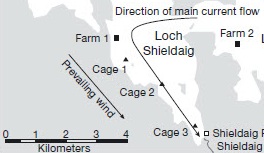
The three sentinel cages were stocked each with 50 salmon for a week at a time, once a month from April 2006 to September 2008.
The Pert paper highlights that a total of 5,007 sea lice were sampled from 3,097 salmon. (average 1.6 lice per fish). However, I know that some point in the past, I will have requested access to the raw data, but this was never supplied and I cannot remember what reason was given as to why. It is therefore impossible to know how the lice were spread amongst the fish. What is apparent from the data is that 3,097 fish were recorded, yet stocking 3 pens for 30 months with 50 fish would mean that 4,500 fish were actually deployed, meaning that 1,403 fish were unaccounted for.
Pert reports that the total number of lice recorded from each of the three cages were 1,333, 1,515, and 2,159 respectively. This means that the sentinel cage nearest the farm had the lowest lice count. Pert does not explain this other than to say that more lice are found near the estuary, but it does beg the question why the sentinel cages nearest the farm does not have the highest lice count. After all, why would infective sea lice larvae pass over the first fish they encounter to infest those nearer the estuary. It makes no sense. As already highlighted, Pert suggests that the higher lice numbers in the cages near er the estuary are consistent with findings of larval lice counts but in reality, the two are not connected because as already highlighted high lice concentrations would be expected naturally in river estuaries regardless of the presence of salmon farms or not.
The CSA report highlighted that sentinel cage proximity to a salmon farm did not determine the prevalence of sea lice on sentinel salmon, but it clearly should. The fact that it didn’t demonstrates that this work is flawed.
Returning to the first point, which was that infestation pressure on sentinel fish correlated with lice counts from nearly farms, the evidence is also not clear cut.
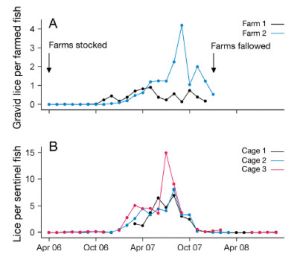
The diagram from the Pert paper initially seems to show a clear relationship between farms and lice counts on sentinel cages. Yet on closer examination, the peak lice count on cage 3, which is the furthest away from the farms but nearest the estuary, appear to peak before the lice counts on the farms peak. In the discussion, Pert says that he had to ‘de-trend’ the data in order to establish a relationship between the farm counts and those on the sentinel cages. Analysis of the untransformed data leads to other inferences which are not discussed. Interestingly, both farms were treated for lice, seemingly more than once, but Pert says that there was no evidence that changes in farm count brought about by treatments led directly to changes in changes in infestation pressure in the sentinel cages. Pert says that Marshall (2003) also found that whilst lice treatments impacted lice counts on farms, there was no apparent effect on wild fish. The paper by Marshall is one long forgotten because it does question the relationship between salmon farms and wild salmon lice counts. Her abstract states that ‘there is a lack of conclusive statistically significant correlations between lice abundance on wild and farmed fish which indicates that other factors have a greater importance to lice abundance. In particular there is a seasonality apparent in the data both in terms of lice abundance and stages present.’ This would suggest that sea lice populations associated with wild fish may have a major role in infestation of wild fish in areas around salmon farms.
The CSA reviews another three papers before making his next comment. I will leave this until another time as I don’t want to expose readers of reLAKSation to too much scientific critique in one go. I also do not want to discuss the report’s science in every forthcoming issue of reLAKSation as there are other issues arising all the time that might merit discussion.